
Sierra Surf's Future Field FAQs
Sierra Surf Soccer Club has officially signed a Ground Lease with the University of Nevada for a portion of their Main Station Field Lab property. This represents a significant step forward and creates a real opportunity to pursue the development of a long-term facility for our players and community.
Why is Sierra Surf pursuing a facility project?
Sierra Surf is pursuing this project to address the club’s most significant long-term challenge: consistent access to quality fields.
Today, our teams train and play across multiple locations, which can limit scheduling consistency, player development, and the overall experience for families.
A dedicated facility would allow the club to:
- Provide a more consistent and player-centered training environment
- Improve field quality and availability
- Bring teams, coaches, and families together in one location
- Support the long-term growth and sustainability of the club
At its core, this effort is about creating a better experience for players and families—not just today, but for the future of the club. We continue to pursue our mission every day: To create “best of the best” experiences and opportunities for youth soccer players, parents and coaches through our club, events and facilities.
What has Sierra Surf secured so far?
Sierra Surf has signed a Ground Lease with the University of Nevada for the Main Station property.
This agreement provides the club with the ability to pursue development of the site and represents a significant step forward in establishing a long-term home for Sierra Surf.
The lease is scheduled to go before the Board of Regents for final approval, which is the next key milestone in the process.
Why is Sierra Surf announcing this now?
The project is being presented to the Board of Regents in June, and the agenda for that meeting will become part of the public record in the coming weeks.
We believe it’s important that our members hear significant updates like this directly from the club, rather than through public channels.
This approach allows us to share the update responsibly and make sure our families understand that while this is a meaningful step forward, the project is still in the early stages.
Where is the facility located?
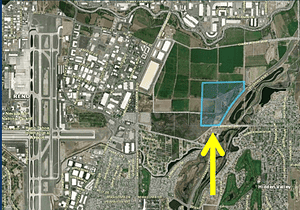
The site is located at the University of Nevada’s Main Station property in Northern Nevada. It’s at the intersection of Veterans Parkway and Pembroke Drive.
This location provides a unique opportunity to develop a dedicated soccer facility in partnership with the University.
How big is the facility and how many fields are planned?
The project is planned for a large site at the University of Nevada’s Main Station property, with enough space to support a full multi-field soccer complex developed over time.
The size of the property allows for a phased approach, where fields and supporting infrastructure can be added as the project progresses.
The long-term vision is to develop up to 7 – full size (11 v 11) fields on the site.
Development will be phased, with the goal of building fields as funding, site conditions, and project milestones allow.
The initial focus will be on getting the first set of fields in place and operational, then expanding over time.
Is the project fully approved?
Not yet. The Ground Lease is expected to go before the Board of Regents in June for final approval.
What happens next?
The next step is to complete due diligence on the site, including environmental studies and overall feasibility evaluation.
This process is critical to confirm that the property is suitable for development and to identify any potential challenges early.
Following that, the project would move into planning, permitting, and phased development—subject to Board of Regents approval and the results of site validation.
Is this guaranteed to happen?
No. While signing the Ground Lease is a major milestone, final approval and site validation are still required.
When will fields be built?
There is no confirmed timeline yet. Additional steps—including approval, planning, and funding—must be completed before construction begins.
Will this affect current teams?
No. There are no immediate changes to training or games
Will this increase club fees?
At this stage, there are no changes to club fees.
As the project develops, the goal will be to build a sustainable model that balances affordability with long-term investment in facilities. Any future changes would be communicated clearly and well in advance. Our goals are to improve overall value to our members, lower the cost of club soccer, and provide more resources to our coaches.
How will the club pay for the facility?
The project is intended to be supported through a combination of:
- Fundraising efforts
- Sponsorships and partnerships
- Revenue generated through the facility over time (such as tournaments, rentals, and events)
In addition, the base annual lease cost is lower than the club’s current field-related expenses, which provides a strong foundation for long-term sustainability.
A detailed funding plan will be developed as the project progresses and key milestones—such as site validation—are completed.
Can families get involved?
Opportunities to support the project will be shared as planning and fundraising efforts develop.
Isn’t the property in a flood zone?
Yes, the property is located within the Critical Flood Zone, which is one of the reasons it is being considered for this type of use.
Soccer fields and a permeable parking area are well-suited to this environment, as they are low-impact and can accommodate periodic flooding more effectively than traditional structures.
As part of due diligence, the club will evaluate site conditions carefully and incorporate appropriate design and risk management strategies into the development plan and gain approval from the governing agencies. All development plans will be based around the fact that the property will flood.
What water source will be used to maintain the fields?
The facility will use effluent (reclaimed) water for irrigation.
This is a common and responsible approach for large-scale landscapes and athletic fields throughout the region. Using reclaimed water helps conserve potable (drinking) water while providing a reliable and sustainable source for maintaining high-quality playing surfaces.
Effluent water is treated and recycled water that is not used for drinking but is safe and widely used for irrigation, including parks, golf courses, and athletic fields.
What amenities will be included at the facility?
The initial development will be intentionally simple and focused on the fields.
Because the property is located within a floodplain, the plan is to keep the facility bare bones in the early phases, with minimal permanent structures.
Early elements are expected to include:
- Grass playing fields
- Basic field infrastructure (goals, benches, etc.)
- Permeable parking areas
- Perimeter fencing and controlled access
This approach allows the club to move efficiently, minimize environmental impact, and maintain flexibility as the project evolves.
Additional amenities may be considered over time, but the primary focus will be on creating high-quality playing surfaces.
Who will regulate and operate the facility?
Sierra Surf Soccer Club will be responsible for the day-to-day operation and management of the facility.
This will include:
- Scheduling and field allocation
- Maintenance and field care
- Program and event management
- Establishing usage guidelines and policies
The club will develop an operational structure to ensure the facility is managed professionally and sustainably over time.
Who will determine when the fields are open and closed?
Once developed, field usage—including when fields are open or closed—will be managed by Sierra Surf Soccer Club as part of the facility’s operations.
Decisions will be based on factors such as:
- Field conditions and maintenance needs
- Weather and seasonal considerations
- Scheduling and programming requirements
The goal will be to ensure player safety and long-term field quality.
How is this different from past projects?
This effort is different in a few important ways.
First, the club has a signed Ground Lease with the University of Nevada, along with a defined path to Board of Regents approval, which provides a level of structure and partnership that previous efforts have not had.
Second, the site itself offers key characteristics that are critical for a successful field project, including relatively flat, usable land and access to effluent (reclaimed) irrigation water—two of the most important components in developing and maintaining high-quality natural grass fields.
Third, the project is being approached in a phased, step-by-step manner, beginning with site validation and due diligence before moving into development.
Just as important, the club is committed to being disciplined in how this is executed and communicated—focusing on real progress at each stage rather than making assumptions or promises before key milestones are achieved.
Our goal is simple: to build this the right way and give it the best chance to succeed over time.
What’s next for communication?
If the Ground Lease is approved by the Board of Regents in June, the club plans to host a Town Hall meeting to share additional details and answer questions from members.
In the meantime, updates will continue to be shared as key milestones are reached.